Te Reo Māori for Everyday
Discover how to learn te reo Māori phrases for everyday use with practical tips, essential greetings, and key resources. Connect with New Zealand’s indigenous culture.

serendipityave.co.nz
What You Will Learn
Discover how to learn te reo Māori phrases for everyday use with practical tips, essential greetings, and key resources. Connect with New Zealand’s indigenous culture.
Nau mai, haere mai! Welcome to the journey of rediscovering Te Reo Māori, the indigenous language of Aotearoa New Zealand. For many, the idea of learning a new language can seem daunting, but incorporating Te Reo into your daily life is not just about memorizing words; it’s about connecting with a vibrant culture, understanding the land beneath our feet, and embracing a crucial part of our national identity. Serendipity Ave is committed to fostering this connection, offering practical ways for every New Zealander to confidently begin to learn te reo Māori phrases and integrate them seamlessly into their everyday interactions. Let’s dive into making Te Reo a living language for all of us.
Table of Contents
- Common Greetings & Phrases
- Understanding Place Names
- Resources for Learning Te Reo
- Why Te Reo Matters for All New Zealanders
- Frequently Asked Questions
- References & Sources
Common Greetings & Phrases
Starting with simple greetings is the most approachable way to learn te reo Māori phrases. These everyday interactions can transform a mundane moment into a meaningful cultural exchange. Imagine the impact of greeting your barista, your colleague, or even your neighbour with a phrase in Te Reo. It’s a small step that makes a big difference.
Essential Daily Expressions
- Kia ora: Hello/Hi (a warm, all-purpose greeting, often pronounced ‘kee-a-ora’)
- Mōrena: Good morning (pronounced ‘maw-reh-na’)
- Ata mārie: Good morning (more formal, ‘a-ta maa-ree-eh’)
- Pō mārie: Good night (pronounced ‘paw maa-ree-eh’)
- Haere rā: Farewell (to someone leaving, ‘haa-eh-reh raa’)
- E noho rā: Farewell (to someone staying, ‘eh naw-haw raa’)
- Ka kite anō: See you again (pronounced ‘ka kee-teh a-naw’)
- Tēnā koe: Greetings to you (singular, ‘teh-na koh-eh’)
- Tēnā kōrua: Greetings to you two (dual, ‘teh-na kaw-roo-a’)
- Tēnā koutou: Greetings to you all (plural, ‘teh-na kaw-toh-oo’)
- Kei te pēhea koe?: How are you? (singular, ‘kei teh peh-heh-a koh-eh’)
- Ka pai: Good/Nice/Well done (‘ka pai’)
- Miharo: Wonderful/Amazing (‘mee-haa-raw’)
Don’t be afraid to try! Even if your pronunciation isn’t perfect at first, the effort is genuinely appreciated. Consistency is key when you want to learn te reo Māori phrases effectively.
Stat Callout: Growing Engagement
A 2021 survey by Te Taura Whiri i te Reo Māori (the Māori Language Commission) found that over 1 million New Zealanders could speak some Te Reo Māori, marking a significant increase in engagement with the language.

Understanding Place Names
Beyond greetings, a profound way to engage with Te Reo and the land is by understanding the Māori names of places. Many of New Zealand’s towns, cities, rivers, and mountains carry names rich with history, descriptive imagery, and ancestral stories. Learning their meanings offers a deeper appreciation for our environment and heritage.
Decoding Aotearoa’s Landscape
- Aotearoa: New Zealand (often translated as ‘Land of the Long White Cloud’)
- Rotorua: ‘Second great lake’ (after the first, Taupō)
- Whanganui: ‘Great harbour’ or ‘Great wait’
- Ōtautahi: Christchurch (named after Ngāi Tahu chief Te Potiki-tuhawaiki’s hut ‘Ō Tautahi’)
- Waitākere: ‘Rippling water’
- Pukekura: ‘Hill of the red glow’
- Whakatāne: ‘To act like a man’ (referring to an ancestral story)
“Every Māori place name is a story waiting to be told, a connection to the land and its people that runs generations deep. To know the name is to know a piece of history.”
– Serendipity Ave Cultural Insights
Next time you’re traveling through New Zealand, take a moment to research the Māori names of the places you visit. It’s a powerful way to enhance your understanding and connect more intimately with Aotearoa.

Resources for Learning Te Reo
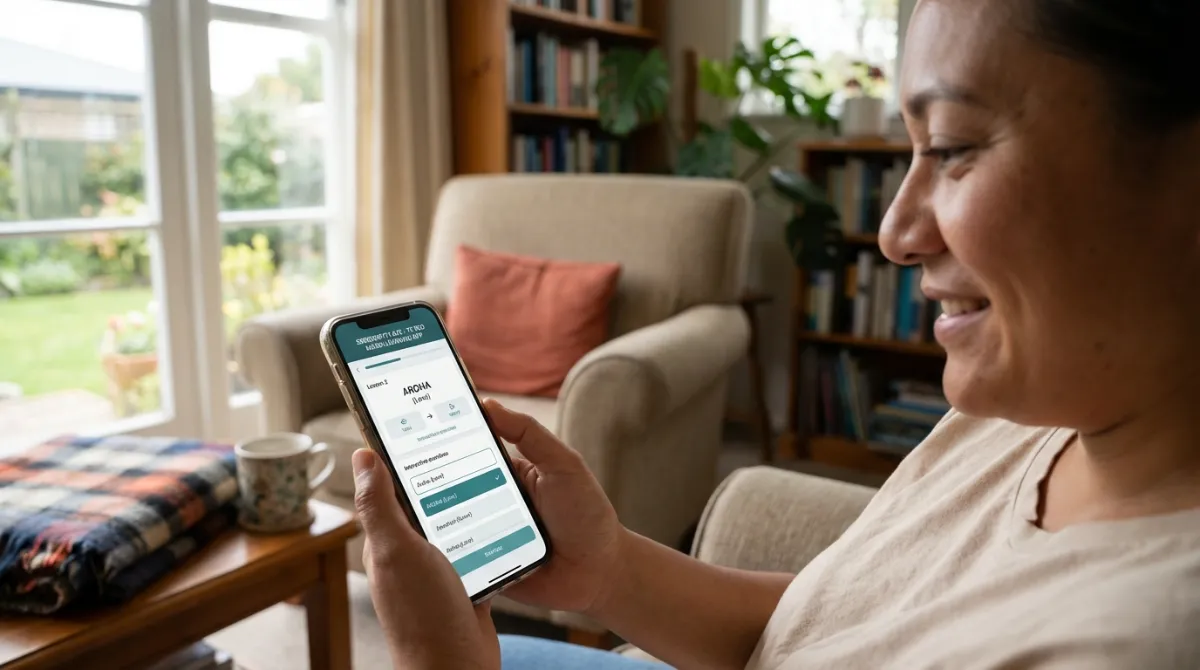
The journey to learn te reo Māori phrases is more accessible than ever, thanks to a wealth of resources available to New Zealanders. Whether you prefer digital tools, structured courses, or community engagement, there’s an option for everyone.
Action Checklist: Your Te Reo Learning Path
- Download Language Learning Apps: Apps like ‘Te Pūmanawa’ by Te Wānanga o Aotearoa, ‘Kupu’ by Spark, or ‘Drops’ offer engaging ways to learn vocabulary and pronunciation.
- Utilize Online Courses: Websites such as ‘Toro Mai’ by Te Wānanga o Raukawa provide free, comprehensive online courses from beginner to advanced levels. ‘Te Aka Māori Dictionary’ is an invaluable online resource.
- Engage with Local Wānanga or Community Groups: Many communities offer evening classes or kōrero (conversation) groups. Check with your local marae, library, or community centre.
- Listen to Te Reo Māori Radio & TV: Tune into Te Reo Māori radio stations like Tahu FM or watch Māori Television to immerse yourself in the language and culture.
- Integrate into Daily Habits: Label items around your house, change your phone language, or try to think in Te Reo for simple actions. Practice saying ‘Mōrena’ instead of ‘Good morning’ daily.
- Read Children’s Books in Te Reo: These often use simple, repetitive language and are a fantastic way to build foundational understanding and vocabulary.
Commit to just 5-10 minutes a day, and you’ll be amazed at how quickly you can start to understand and use new phrases. The key is consistent exposure and active participation.
Why Te Reo Matters for All New Zealanders
The revitalisation of Te Reo Māori is not just a Māori issue; it’s a New Zealand issue. The language is a tāonga (treasure) that enriches our collective identity, history, and future. Embracing Te Reo is a step towards understanding and honouring the Treaty of Waitangi, and fostering a truly unique bicultural nation.
Cultural Preservation and National Identity
Te Reo Māori carries the nuances of Māori worldviews, traditional knowledge, and philosophical concepts that cannot be fully translated into English. By learning the language, we gain access to these unique perspectives, deepening our appreciation for indigenous wisdom and strengthening our national character on the global stage. It is an act of cultural preservation and pride.
Fostering Connection and Reconciliation
Speaking Te Reo is a powerful act of connection. It builds bridges between cultures, shows respect, and contributes to the ongoing journey of reconciliation between Māori and Pākehā. When you endeavour to learn te reo Māori phrases, you’re not just acquiring a skill; you’re participating in a movement that seeks to heal historical wounds and build a more inclusive future for all New Zealanders.
Stat Callout: Language Revitalisation Impact
The number of New Zealanders who can hold a conversation in Te Reo Māori has nearly tripled since 2001, highlighting the success and importance of ongoing revitalisation efforts.
Frequently Asked Questions
Q: Is Te Reo Māori difficult to learn?
A: Like any new language, Te Reo Māori requires dedication, but its phonetic nature (words are pronounced as they are written) makes pronunciation relatively straightforward. The effort is highly rewarding, and many resources are designed for beginners to help you learn te reo Māori phrases effectively.
Q: How quickly can I become conversational?
A: This varies greatly depending on your commitment and learning method. Consistent daily practice, even just 10-15 minutes, can allow you to grasp basic greetings and common phrases within a few weeks. Immersion and structured courses will accelerate your progress.
Q: What’s the best way to practice pronunciation?
A: Listen to native speakers on Māori TV or radio, use pronunciation guides in apps, and don’t be shy to repeat phrases aloud. Recording yourself and comparing it to native speech can also be very helpful. Attending kōrero (conversation) groups is ideal.
Q: Do I need to be Māori to learn Te Reo?
A: Absolutely not! Te Reo Māori is a language for all New Zealanders, and anyone with an interest is encouraged to learn. It’s an act of respect and connection to the unique culture of Aotearoa.
References & Sources
- Te Taura Whiri i te Reo Māori (Māori Language Commission) – Official website for Te Reo Māori revitalisation.
- Statistics New Zealand – Data on language proficiency and cultural identity.
- Te Aka Māori-English, English-Māori Dictionary and Index (online).
- Ministry for Culture and Heritage (Manatū Taonga) – Information on New Zealand history and culture.