Upcycling & Repairing Clothes: Extend the Life of Your Wardrobe in NZ
In an era of fast fashion, embracing the longevity of our clothing is more crucial than ever. For New Zealand women seeking both style and sustainability, learning to repair clothes NZ-style isn’t just a practical skill—it’s a powerful statement against waste and a step towards a more mindful wardrobe. Imagine transforming a beloved but worn garment into something fresh, or simply mending a small tear to keep it in circulation. This guide will empower you to breathe new life into your clothes, saving money and the planet, one stitch at a time.
Why Repair Matters: Reducing Fashion Waste
The fashion industry is a major contributor to global waste and pollution. Each year, millions of tonnes of textiles end up in landfills, much of which could have been saved with simple repairs or creative upcycling. Choosing to mend your clothes, rather than replacing them, is a tangible way to lessen your environmental footprint and promote sustainable fashion practices right here in New Zealand.
Did you know?
According to research, extending the life of clothing by just nine extra months of active use would reduce carbon, water, and waste footprints by around 20-30% each. (WRAP, 2012)
Beyond the environmental benefits, repairing your garments can also be incredibly satisfying and cost-effective. Instead of spending money on new items, you invest a little time and effort into preserving what you already own. This shift in mindset from ‘disposable’ to ‘durable’ is at the heart of ethical fashion.
Basic Repair Skills for Beginners
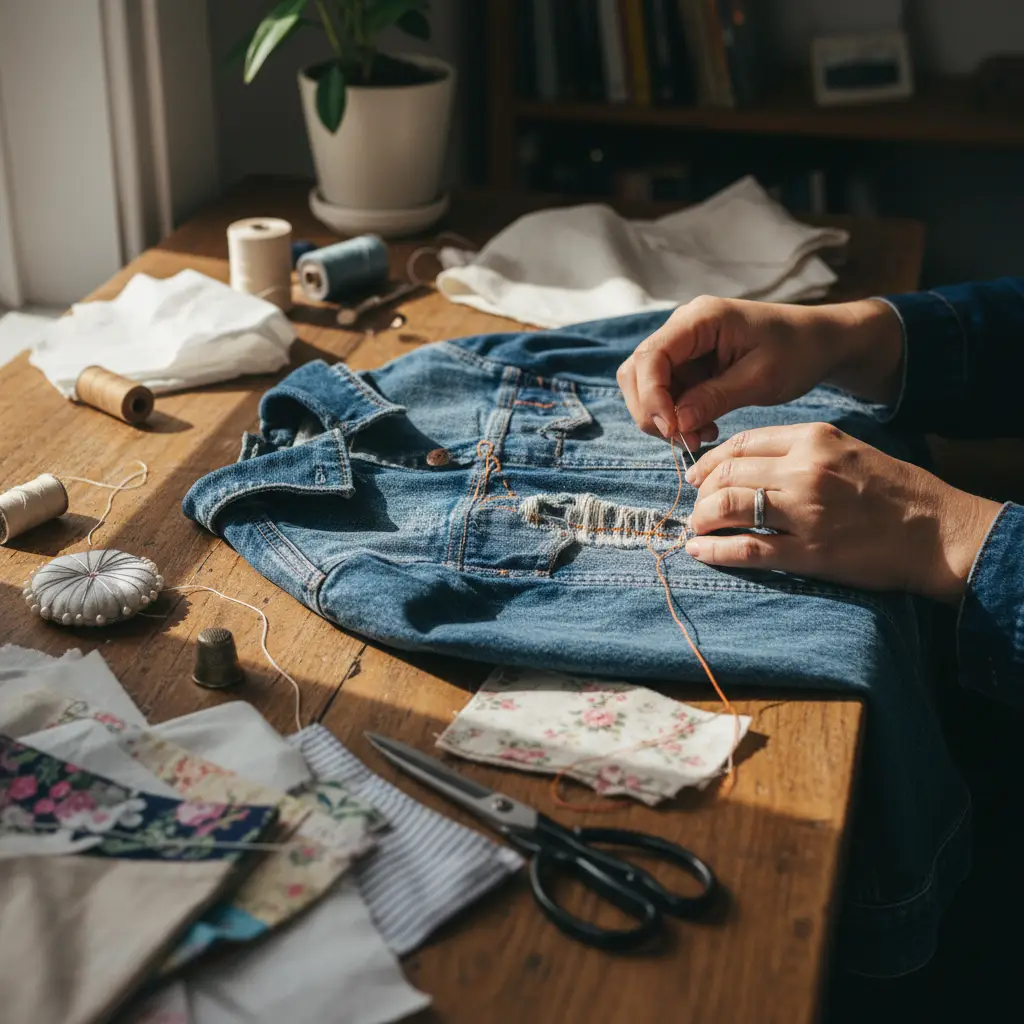
You don’t need to be a master tailor to start fixing your clothes. A few fundamental skills can go a long way in extending the life of your favourite garments. Here are some essential techniques to get you started on your journey to repairing clothes in NZ.
1. Mending a Loose Seam
A common issue, easily fixed! This applies to skirts, trousers, blouses, or any item where the stitching has come undone.
- Gather your tools: Needle, matching thread, fabric scissors, pins.
- Turn the garment inside out: This allows you to work on the seam neatly.
- Align the edges: Carefully bring the fabric edges together where the seam has separated. Use pins to hold them in place.
- Start stitching: Begin a few stitches before the loose area, and end a few stitches after it, to secure the repair. Use a backstitch for strength – pushing the needle through the fabric, then back a little, and forward again.
- Knot and trim: Once the seam is secure, knot the thread firmly on the inside and trim any excess.
2. Replacing a Missing Button
Lost buttons are a quick fix that can save a garment from being discarded.
- Find a matching button: Check the garment’s care tag for spares, or buy a similar one.
- Mark the spot: Use a fabric pencil or a small pin to mark where the button should sit.
- Thread your needle: Use a double strand of thread for extra durability.
- Sew the button: Start from the back of the fabric, bringing the needle through to the front. Pass it through one hole of the button, then back down through another hole and the fabric. Repeat 4-5 times for each set of holes.
- Create a shank (optional but recommended): For thicker fabrics or coats, wrap the thread several times around the base of the stitches between the fabric and the button. This creates a small ‘shank’ allowing the button to sit better.
- Finish securely: Knot the thread tightly on the underside and trim.
3. Patching a Small Hole
Don’t let a small tear lead to a big problem. Patching can be practical or even a creative statement!
- Trim frayed edges: Neatly trim any loose threads around the hole.
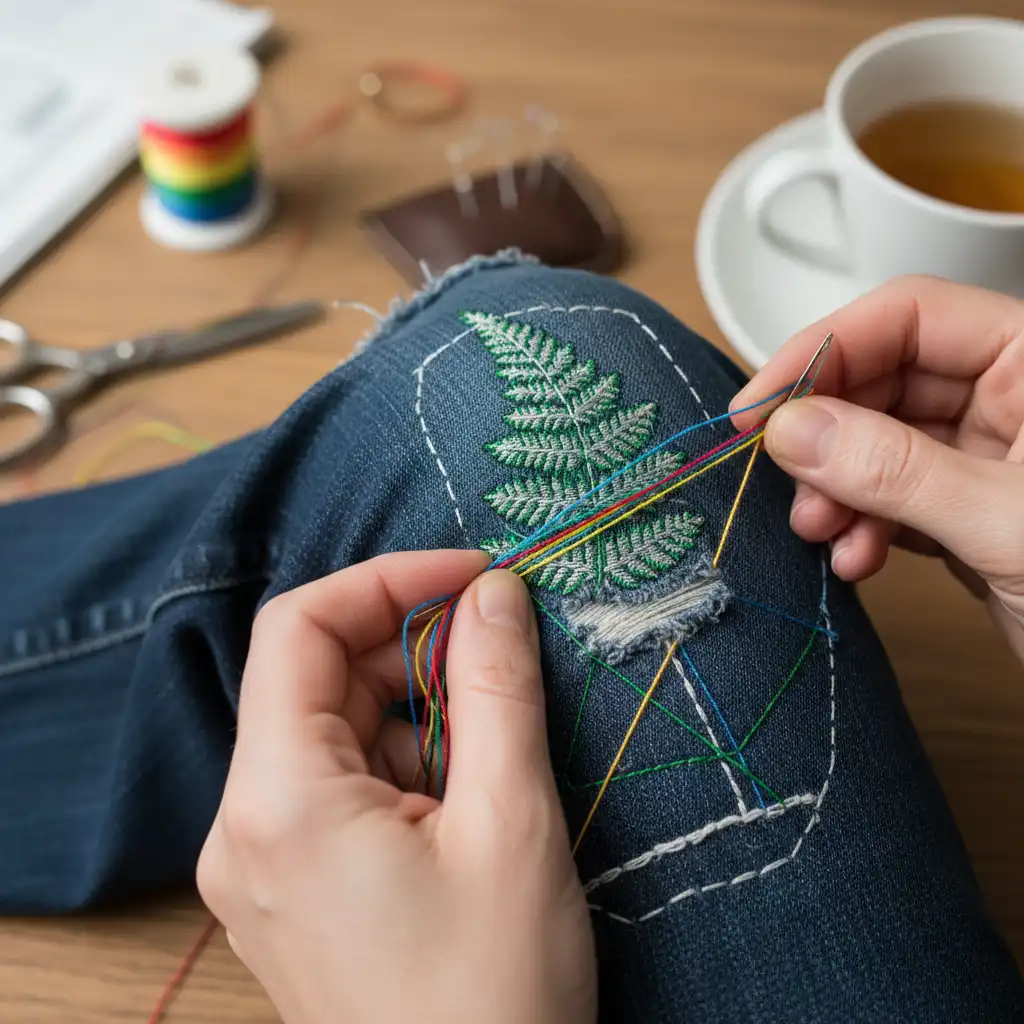
- Choose your patch: Find a piece of fabric that matches (or contrasts for a visible mend) the original garment. Denim scraps, old cotton shirts, or even decorative patches work well.
- Cut the patch: Make it slightly larger than the hole, with at least 1-2 cm overlap on all sides.
- Position and pin: Place the patch on the inside of the garment, covering the hole. Pin it securely.
- Stitch it down: Using a running stitch or whipstitch, sew the patch to the garment, working around the edges. For added strength, you can do another row of stitches. For a decorative look, stitch the patch on the outside with contrasting thread.
- Iron for flatness: Press the patched area gently to flatten it.
Creative Upcycling Ideas for Old Clothes
Upcycling is about transforming old clothing into something entirely new and functional, giving it a second life beyond its original purpose. It’s a fantastic way to express creativity and significantly reduce textile waste.
“Upcycling allows us to see potential where others see waste, turning discarded items into treasured pieces that reflect our unique style and values.” – Sustainable Fashion Advocate
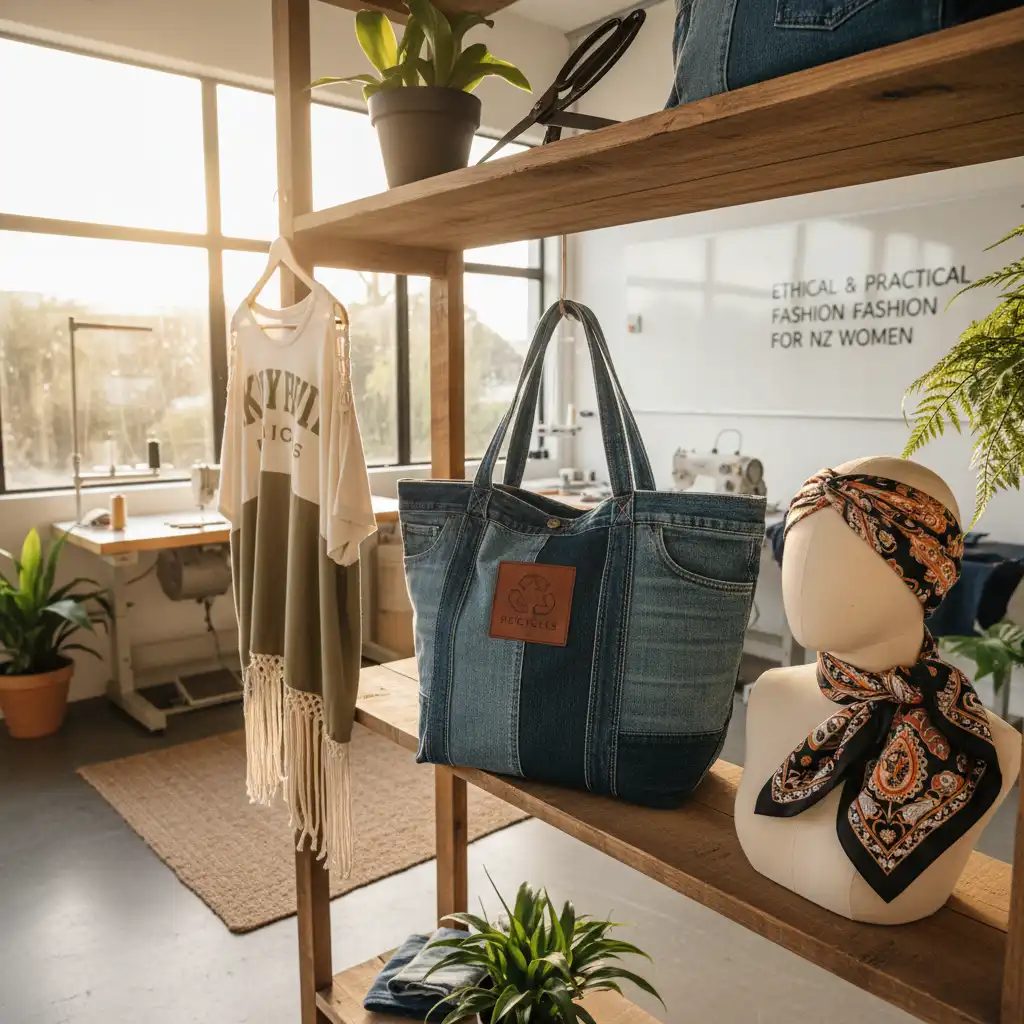
- Denim Transformations: Turn old jeans into stylish shorts, a sturdy tote bag, or even practical placemats. The durable fabric is perfect for many projects.
- T-Shirt Reimagination: Give tired t-shirts a new lease on life as cut-off tops, fabric yarn for knitting, or even cleaning rags. You can also sew several together to create a unique throw blanket.
- Shirt to Skirt/Dress: An oversized men’s button-up shirt can be refashioned into a chic summer skirt or a simple dress with a little creative cutting and sewing.
- Fabric Dyeing & Embellishment: Revitalize faded garments with natural dyes or add embroidery, patches, and fabric paint to give them a bespoke look.
- Scraps to Accessories: Small fabric scraps can become headbands, scrunchies, keychains, or even patchwork elements for other upcycled items.
Finding Professional Repair Services in NZ
While DIY repairs are incredibly rewarding, some garments require the expertise of a professional. For complex alterations, intricate repairs, or delicate fabrics, a skilled tailor or specialised repair shop can be invaluable. When you need expert help to repair clothes NZ-wide, consider these options:
- Local Tailors & Alteration Shops: These are your go-to for major adjustments like resizing, zipper replacements, or lining repairs. Search online for “tailor near me” or “alterations New Zealand” to find reputable services in your area.
- Dry Cleaners: Many dry cleaning establishments offer basic mending services, such as button reattachment, small seam repairs, and hemming. It’s convenient if you’re already dropping off items for cleaning.
- Specialty Repair Shops: For leather goods, shoe repairs, or even specific outdoor gear, look for businesses that specialise in those materials. They often have the right tools and expertise for durable fixes.
- Online Directories & Local Forums: Websites like Yellow Pages NZ or local community Facebook groups can be excellent resources for recommendations on trusted clothing repair services in your specific town or city.
Don’t hesitate to ask for quotes and check reviews before committing to a service to ensure you find the best fit for your needs and budget.
Community Workshops & Resources for Repair
Learning to mend and upcycle is a journey, and you don’t have to go it alone! New Zealand boasts a growing number of community initiatives dedicated to fostering repair skills and sustainable living.
- Repair Cafes: These volunteer-run events bring together skilled fixers and people with broken items. You can often get help with clothing repairs, learn new skills, and connect with like-minded individuals. Search for “Repair Cafe NZ” to find events near you.
- Adult Education & Community Centres: Many local councils and community centres offer beginner sewing classes, mending workshops, or upcycling courses. These are fantastic places to learn hands-on.
- Online Tutorials & Blogs: Websites like YouTube, Pinterest, and dedicated crafting blogs offer a wealth of free tutorials for all skill levels. Search for “sewing tutorials NZ” or “upcycling DIY New Zealand.”
- Fabric & Craft Stores: Sometimes, local craft stores host workshops or can recommend local instructors and resources for learning textile repair.
- Libraries: Many New Zealand libraries now offer ‘maker spaces’ or host workshops where you can learn practical skills, including mending.
Embrace the community spirit of repair, and you’ll not only gain valuable skills but also contribute to a stronger, more sustainable local culture.
Frequently Asked Questions About Clothing Repair
What are the most common clothing repairs I can do myself?
The most common DIY repairs include sewing on buttons, mending loose seams, patching small holes, and hemming trousers or skirts. These require only basic sewing supplies and a little practice.
Where can I find materials for repairing clothes in NZ?
You can find needles, threads, scissors, and fabric scraps at local craft stores, haberdashery shops, department stores, and even some larger supermarkets across New Zealand. Online retailers also offer a wide range of sewing supplies.
Is it cheaper to repair clothes or buy new ones?
For minor repairs, doing it yourself is almost always cheaper than buying new, costing virtually nothing beyond your time. Even professional repairs, while an upfront cost, are often more economical in the long run than replacing a quality garment entirely, especially if it’s a beloved or expensive item.
What is the difference between repairing and upcycling?
Repairing focuses on fixing a damaged garment to restore its original function (e.g., sewing a torn seam). Upcycling, on the other hand, involves transforming an old or unwanted garment into a new item with a different purpose or aesthetic value (e.g., turning old jeans into a bag). Both contribute to reducing fashion waste.
References & Sources
- WRAP. (2012). Valuing Our Clothes: The true cost of how we design, use and dispose of clothing in the UK. Retrieved from wrap.org.uk/resources/report/valuing-our-clothes (This study’s findings on extending clothing life are widely cited in sustainable fashion discourse globally).
- Ministry for the Environment. (Ongoing). Waste and resource recovery in New Zealand. Retrieved from mfe.govt.nz/waste (General information on waste in NZ).
- The Repair Cafe Foundation. (Ongoing). Retrieved from repaircafe.org/en/ (Information on the global Repair Cafe movement and finding local events).